A desktop app for running your D&D campaign. Your whole world as a web of connected pieces, the story laid out as a spine you can walk, every session planned down to the moment it turns.
Early access · $47 $25 · lifetime updates
I run a game every week, and every tool I tried got in the way.
The hosted ones wanted a subscription and a login before I could write a single NPC. The browser ones lost my world the day the tab crashed. The wikis turned me into a database admin when all I wanted was to prep a session.
So I stopped looking and forged my own.
ScribesBlade is the tool I use at my own table. It's the thing I open on a Tuesday to figure out what my players walk into on Friday. The good problems I solve for myself tend to be the ones you're fighting too.
So here it is.
The right tool, made with care, for the person who needs it.
DestrolaAn NPC, a city, a god, a cursed blade, a faction with a hidden agenda. Each one is a connected element, not a page you lose track of.
The World Bible opens as a colour wheel. Your party sits in the centre. Six families ring them, ordered by hue so no single colour shouts over the others. Pick one and it travels into the middle, grows, and its three types fan out around it.
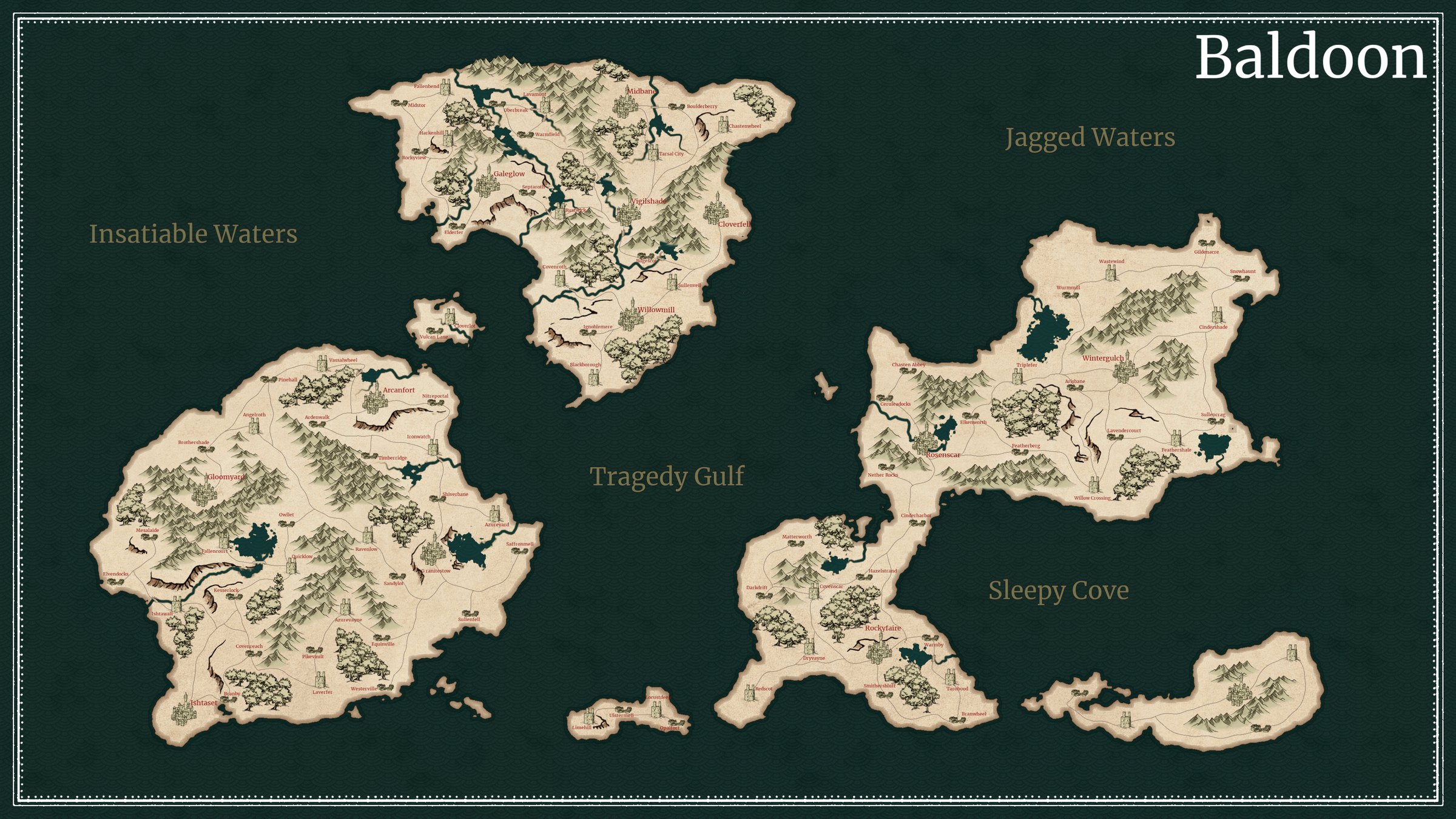
Drop in your own map, a painting, a hand-drawn sketch, whatever you actually run from, and it becomes a surface you can lean over. Zoom from the whole coast down to a single crossroads, and drag it around like paper on the table.
Mark your places and people right on the map, each pin with its own icon and colour, so a glance tells you what is what. Then drop your own points and it traces the trail between them and measures it for you.
The top lane is the whole campaign. Pick an arc and its sessions open right below it, each one a night planned down to its moments. Colour shows where the party is. Grey for played, orange for the night on the table, green for what's still ahead.
A session reads as a walk-through. The quest, the start, every beat in the order you'll hit it with the links between them, the one you've marked as the main encounter, and the cliffhanger you close on. Add as many beats as the night needs, drag them into order, and flip to edit when you want to change something.
Click through to see the functionality below.
I run more than one game in the same world, and I kept losing track of when things happened. So I built the timeline the whole setting hangs on. It's a calendar you define yourself, with your own weekdays, your own months, and your own named eras.
Every dated thing lands on it. The events of your world, the sessions you've run, and the campaigns themselves as spans across the years. So you see the whole shape of your game at a glance, and where each story sits inside it. I needed to run several campaigns through one history without them tangling, so I built it flexible enough that it bends to almost any setting. That's the point.
Session logs, the history of a town nobody's visited yet, the novel your setting keeps asking you to write. Journals is a whole writing tier, sitting in the nav right next to your world.
Journals hold entries, entries hold notes, and every level opens as its own page. A title, a body, a real toolbar. It writes like a word processor because that's what it is. And it stays wired into everything else: type @ and pull in an NPC, a campaign, last Friday's session, and the name lands as a coloured chip you can click straight through.
Click through the tree to see how it reads.
Journals hold entries, entries hold notes. Green, blue, purple, so the tree tells you where you are without reading a word of it.
Type @ and pull in any element, campaign, or session. It lands as a coloured chip, and clicking it opens that thing.
Put a date on an entry and it shows up on the timeline next to everything else that happened. Spans included.
One of the first things a buyer told me was that the text ran small. Fair. So there's an accessibility panel now, and it has a permanent seat in the sidebar. Text size, an easy-read font, and the language the whole thing speaks, all in one place.
Seven languages so far: English, German, Brazilian Portuguese, Spanish, French, Italian, and Polish. The interface follows. Your own writing never gets touched, so your NPCs, your notes and your place names stay exactly as you wrote them, because they're yours, not mine.
This is the real panel. Change it and watch.
The party crossed the bridge at dawn, weapons drawn.
You unlock it once with the key from your purchase, and after that it's just an app you open. No sign-up, no password, no account to manage.
No internet required. The whole thing runs on your machine, offline, whether you're at the table or thirty thousand feet up.
Your world is a folder of plain, readable files on your disk, one for every person, place and thing. Back them up, open them in any editor, or drop the folder in your own cloud drive so your campaign follows you to every device. No account, nothing on our servers.
ScribesBlade isn't a finished box on a shelf. I run a game every week, so whatever I need at my own table tends to land in the app not long after, and the people who bought in get all of it.
You don't go and fetch it. When a release lands, the app says so across the top. Press the button and it downloads inside the app, installs itself, and reopens on the new version. No hunting for an installer, no reinstalling the same file, no version you have to think about.
Press the button. This is what it does.
Buy in now and every update after it is yours, free, for as long as the thing lives. That isn't a launch promise I'm making at you. It's just how it already works.
Early access price, before it climbs. Every update free for as long as it lives.
Early access. Full price is $47 at launch. Lock it in now and every update stays free for life.
No, and that's the deal. ScribesBlade is in active development and you're buying in early. It already runs a real campaign day to day, the World Bible, the web map, the arcs, the sessions. You get the current build and every update after it, free, as it's built.
A Windows machine. You download one installer and double-click it. It isn't code-signed yet, so Windows SmartScreen throws a warning the first time. Click "More info," then "Run anyway," and you're in. Mac is on the list, not in this build.
In a folder you choose, as plain readable files, one for every person, place and thing in your world. They're yours to open, back up, and edit in any text editor, even Word. None of your world data ever leaves your machine. Want your campaign on more than one machine? Put that folder in your own OneDrive, Dropbox or Drive and it syncs itself, and the app still reads it with your wifi off. Reinstalling the app doesn't touch your world.
No login, no account, no server of ours. The app opens and works with your wifi off. If you want your world on more than one device, that's your own cloud drive doing the syncing, not us, and the app still reads it offline. That's the point of a desktop tool instead of a website.
When you buy, you get a licence key. You paste it in once to activate, and from then on it just works. The key is your proof the copy is yours, not an account you log into.
Yes. It's $25 in early access and $47 at launch. If you buy now you keep every future update for free, so the early price is the whole thing, not a stripped-down version. The price climbs, it never drops.
Yes. The interface runs in English, German, Brazilian Portuguese, Spanish, French, Italian, and Polish, and you switch it in the accessibility panel. Your own writing is never translated. The app's furniture changes language, your world doesn't.
A bestiary with table-ready stat blocks, a bundled offline AI helper that runs on your machine with no key and no tokens, and a clean way to hand players their own offline sheet. Buying early puts you in the room while those get built.